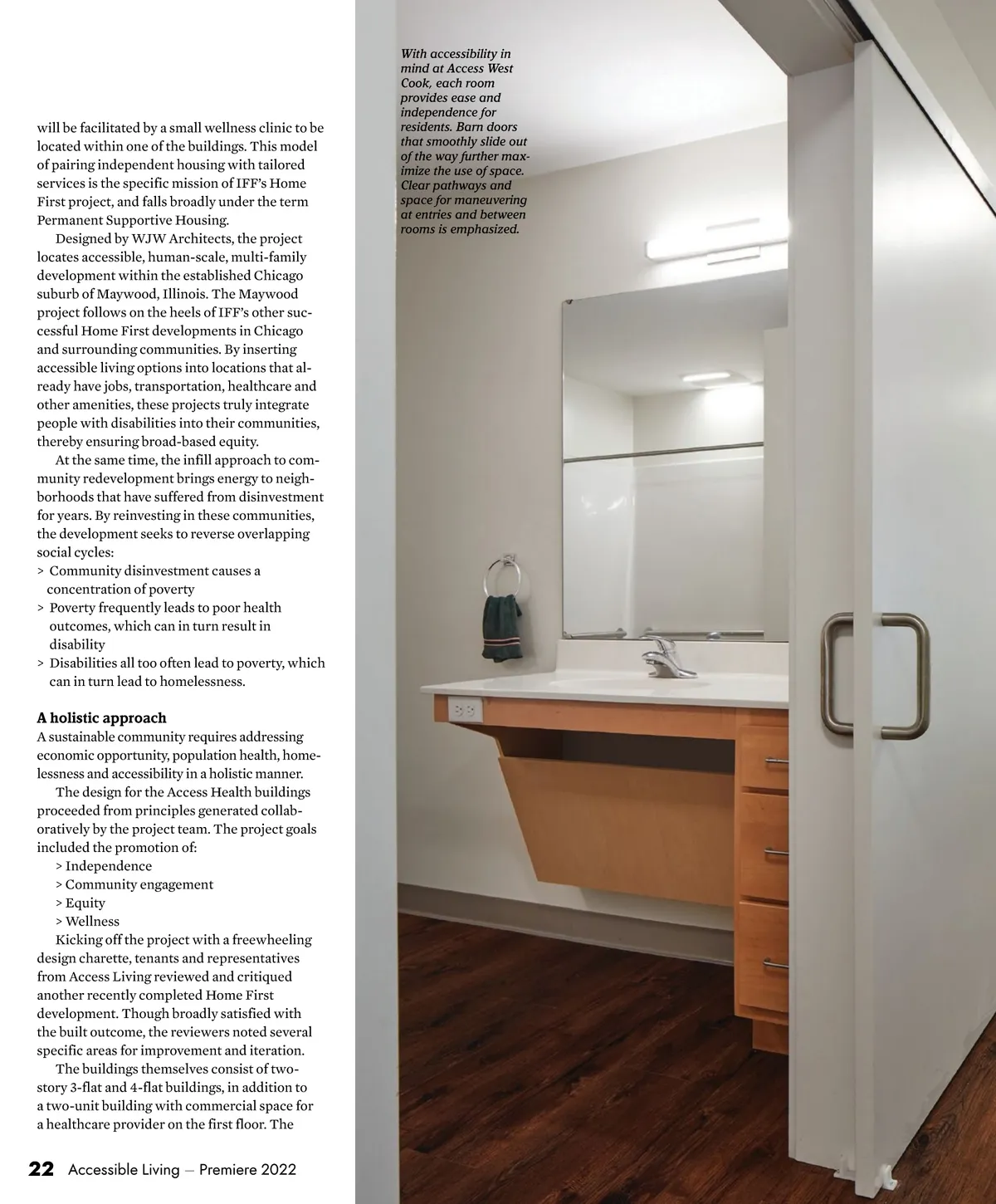
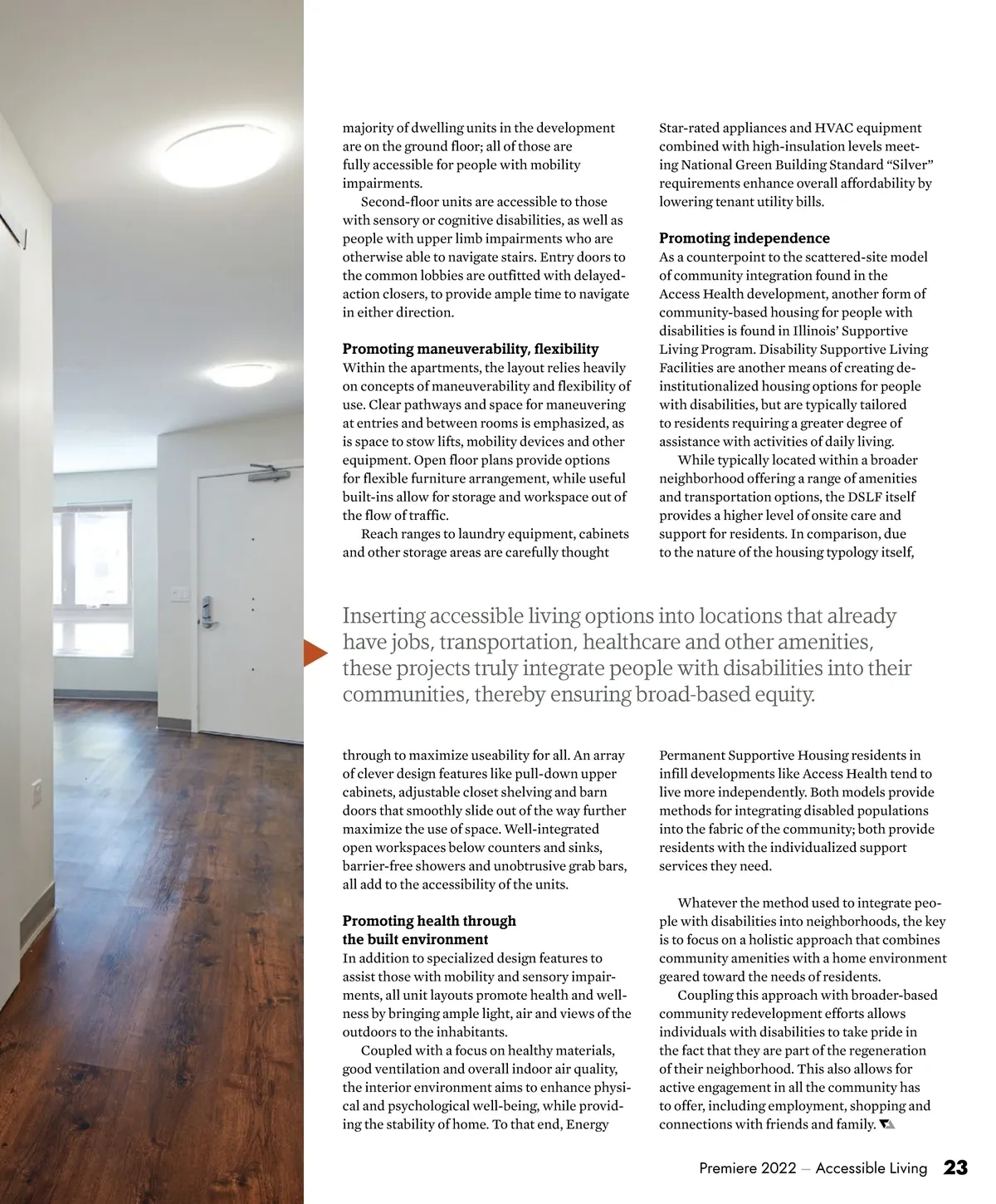
majority of dwelling units in the development are on the ground floor; all of those are fully accessible for people with mobility impairments. Second-floor units are accessible to those with sensory or cognitive disabilities, as well as people with upper limb impairments who are otherwise able to navigate stairs. Entry doors to the common lobbies are outfitted with delayed-action closers, to provide ample time to navigate in either direction. Star-rated appliances and HVAC equipment combined with high-insulation levels meet-ing National Green Building Standard “Silver” requirements enhance overall affordability by lowering tenant utility bills. Promoting independence As a counterpoint to the scattered-site model of community integration found in the Access Health development, another form of community-based housing for people with disabilities is found in Illinois’ Supportive Living Program. Disability Supportive Living Facilities are another means of creating de-institutionalized housing options for people with disabilities, but are typically tailored to residents requiring a greater degree of assistance with activities of daily living. While typically located within a broader neighborhood offering a range of amenities and transportation options, the DSLF itself provides a higher level of onsite care and support for residents. In comparison, due to the nature of the housing typology itself, Promoting maneuverability, flexibility Within the apartments, the layout relies heavily on concepts of maneuverability and flexibility of use. Clear pathways and space for maneuvering at entries and between rooms is emphasized, as is space to stow lifts, mobility devices and other equipment. Open floor plans provide options for flexible furniture arrangement, while useful built-ins allow for storage and workspace out of the flow of traffic. Reach ranges to laundry equipment, cabinets and other storage areas are carefully thought Inserting accessible living options into locations that already have jobs, transportation, healthcare and other amenities, these projects truly integrate people with disabilities into their communities, thereby ensuring broad-based equity. through to maximize useability for all. An array of clever design features like pull-down upper cabinets, adjustable closet shelving and barn doors that smoothly slide out of the way further maximize the use of space. Well-integrated open workspaces below counters and sinks, barrier-free showers and unobtrusive grab bars, all add to the accessibility of the units. Permanent Supportive Housing residents in infill developments like Access Health tend to live more independently. Both models provide methods for integrating disabled populations into the fabric of the community; both provide residents with the individualized support services they need. Whatever the method used to integrate peo-ple with disabilities into neighborhoods, the key is to focus on a holistic approach that combines community amenities with a home environment geared toward the needs of residents. Coupling this approach with broader-based community redevelopment efforts allows individuals with disabilities to take pride in the fact that they are part of the regeneration of their neighborhood. This also allows for active engagement in all the community has to offer, including employment, shopping and connections with friends and family. Promoting health through the built environment In addition to specialized design features to assist those with mobility and sensory impair-ments, all unit layouts promote health and well-ness by bringing ample light, air and views of the outdoors to the inhabitants. Coupled with a focus on healthy materials, good ventilation and overall indoor air quality, the interior environment aims to enhance physi-cal and psychological well-being, while provid-ing the stability of home. To that end, Energy Premiere 2022 – Accessible Living 23
Accessible Living Premiere 2022: Page 23