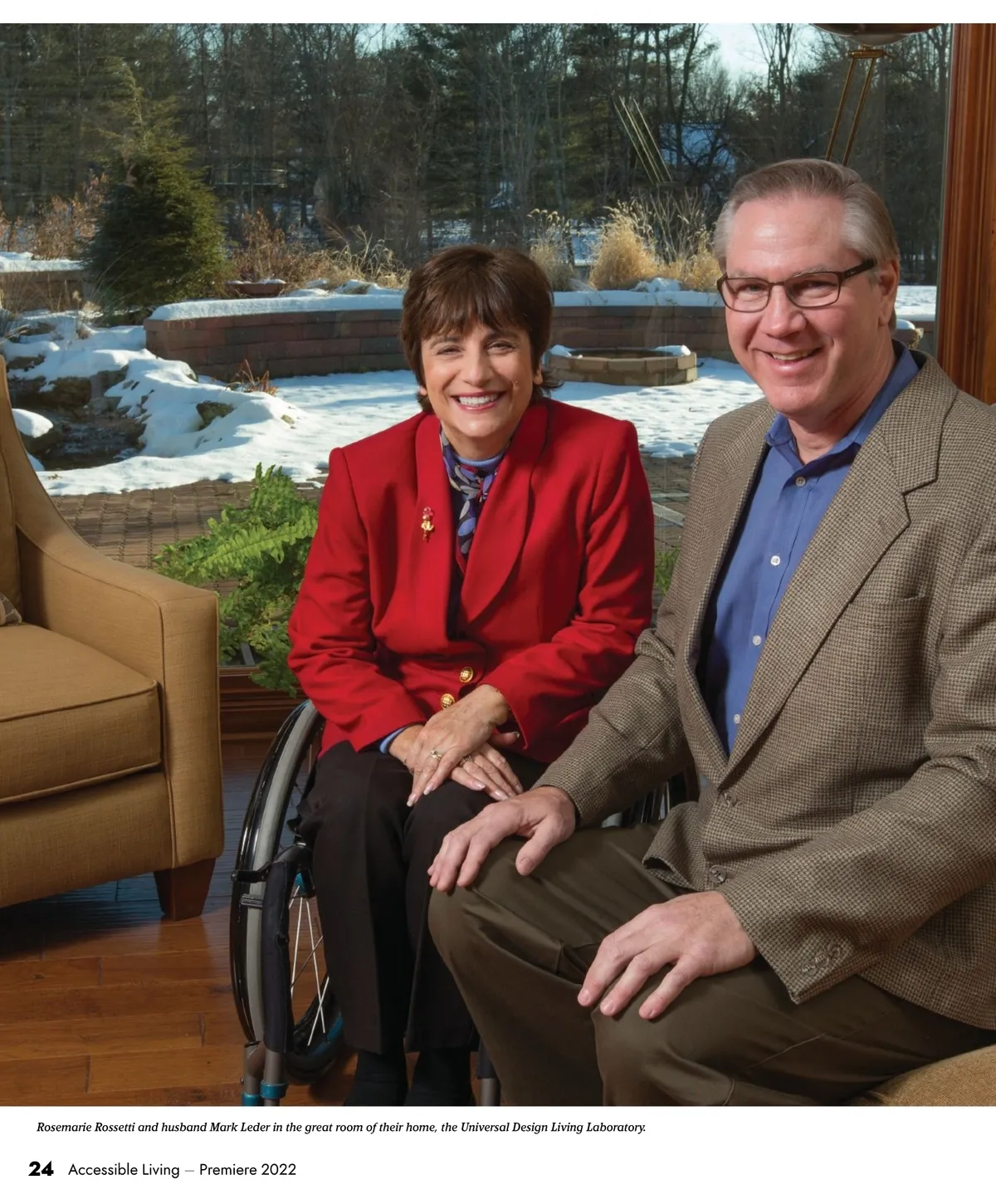
A look back at life in the Universal Design Living Laboratory BY ROSEMARIE ROSSETTI n June 13, 1998, my husband Mark Leder and I went for a bicycle ride on a rural wooded bike trail in Gran-ville, Ohio. After riding for 10 minutes, Mark thought he heard a gunshot and slowed down to investigate. As he scanned the scene, he saw a large tree falling. He shouted, “Stop!” But the warning was too late. Instantly, I was crushed by a 7,000 pound tree and paralyzed from the waist down with a spinal cord injury. After six weeks of being in the rehabilita-tion hospital, I returned home in my wheel-chair. I was shocked and disheartened, real-izing just how much my home intensified my disability. The house was not accessible. Mark had to pull me in my wheelchair up the three steps at the front door. And the carpet was too thick for me to navigate in the wheelchair, so Mark pushed me from one room to another. DESIGN FOR ALL O Designing, building a national demonstration home and garden Universal Design Shortly after coming home from the hospital, I read a magazine article about a woman in a wheelchair who had a home with universal design features. Universal design is a frame-work for creating living and working spaces, and products, to benefit the widest range of people in the widest range of situations with-out special or separate design. The photos in the magazine of her kitchen gave me ideas and hope. I thought, “What if our home had universal design features?” My research began as I read articles and books, toured homes and talked with design and building professionals. My husband is 6 feet 4 inches tall, while I am 4 foot 2 inches seated in my wheelchair. Our heights and reaches were factors in the home design so that we were both accommodated. In September of 2004, we hired architect Patrick Manley to draw the house plans for Premiere 2022 – Accessible Living 25
Accessible Living Premiere 2022: Page 25