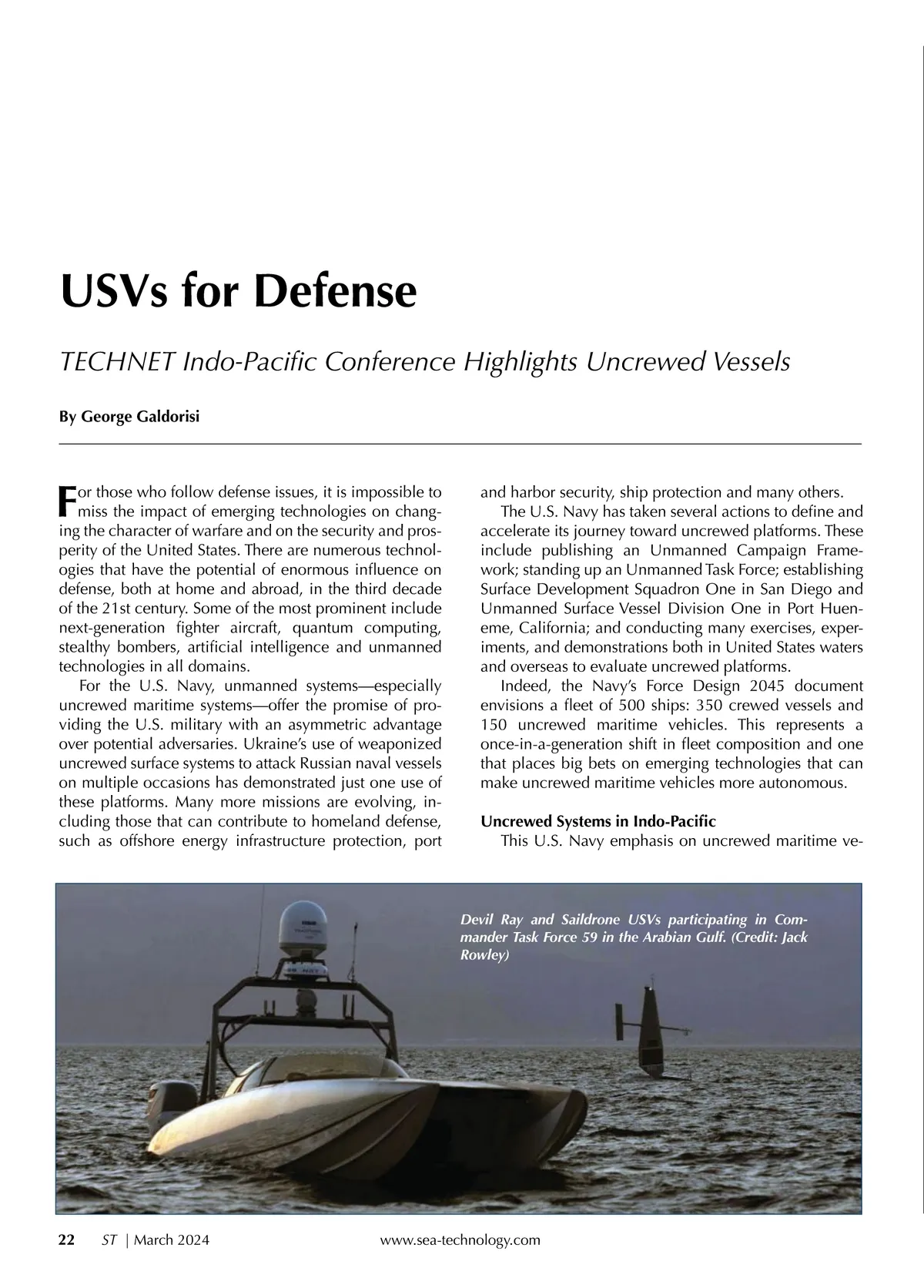
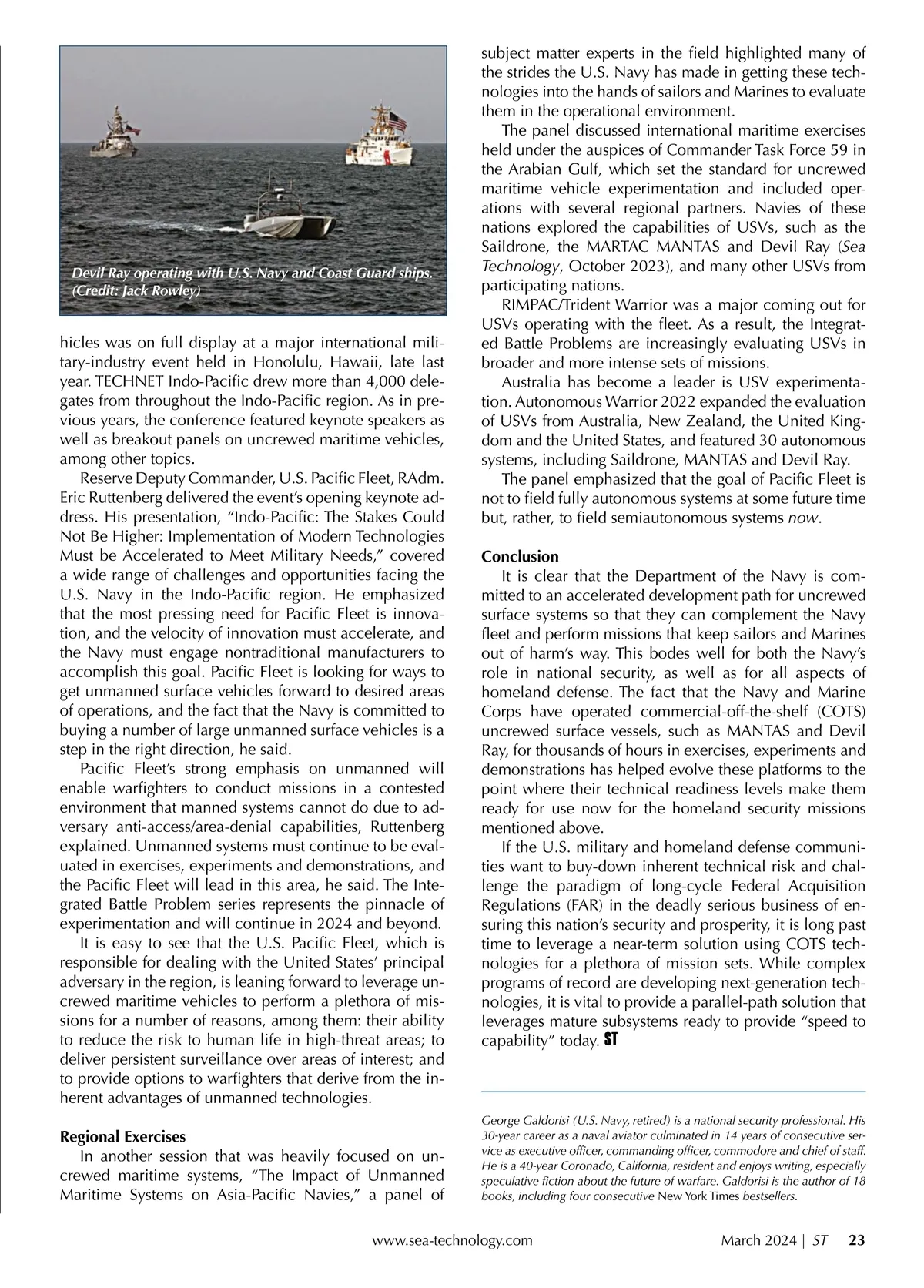
USVs for Defense TECHNET Indo-Pacific Conference Highlights Uncrewed Vessels By George Galdorisi F or those who follow defense issues, it is impossible to miss the impact of emerging technologies on chang-ing the character of warfare and on the security and pros-perity of the United States. There are numerous technol-ogies that have the potential of enormous influence on defense, both at home and abroad, in the third decade of the 21st century. Some of the most prominent include next-generation fighter aircraft, quantum computing, stealthy bombers, artificial intelligence and unmanned technologies in all domains. For the U.S. Navy, unmanned systems—especially uncrewed maritime systems—offer the promise of pro-viding the U.S. military with an asymmetric advantage over potential adversaries. Ukraine’s use of weaponized uncrewed surface systems to attack Russian naval vessels on multiple occasions has demonstrated just one use of these platforms. Many more missions are evolving, in-cluding those that can contribute to homeland defense, such as offshore energy infrastructure protection, port and harbor security, ship protection and many others. The U.S. Navy has taken several actions to define and accelerate its journey toward uncrewed platforms. These include publishing an Unmanned Campaign Frame-work; standing up an Unmanned Task Force; establishing Surface Development Squadron One in San Diego and Unmanned Surface Vessel Division One in Port Huen-eme, California; and conducting many exercises, exper-iments, and demonstrations both in United States waters and overseas to evaluate uncrewed platforms. Indeed, the Navy’s Force Design 2045 document envisions a fleet of 500 ships: 350 crewed vessels and 150 uncrewed maritime vehicles. This represents a once-in-a-generation shift in fleet composition and one that places big bets on emerging technologies that can make uncrewed maritime vehicles more autonomous. Uncrewed Systems in Indo-Pacific This U.S. Navy emphasis on uncrewed maritime ve-Devil Ray and Saildrone USVs participating in Com-mander Task Force 59 in the Arabian Gulf. (Credit: Jack Rowley) 22 ST | March 2024 www.sea-technology.com
Sea Technology March 2024: Page 22